Blog
-
Where application uploads belong: volumes, S3 and Inquir deployment
Choose persistent volumes or object storage, avoid losing uploads during container replacement, and verify file access and recovery on Inquir.
Inquir Compute · · 4 min read -
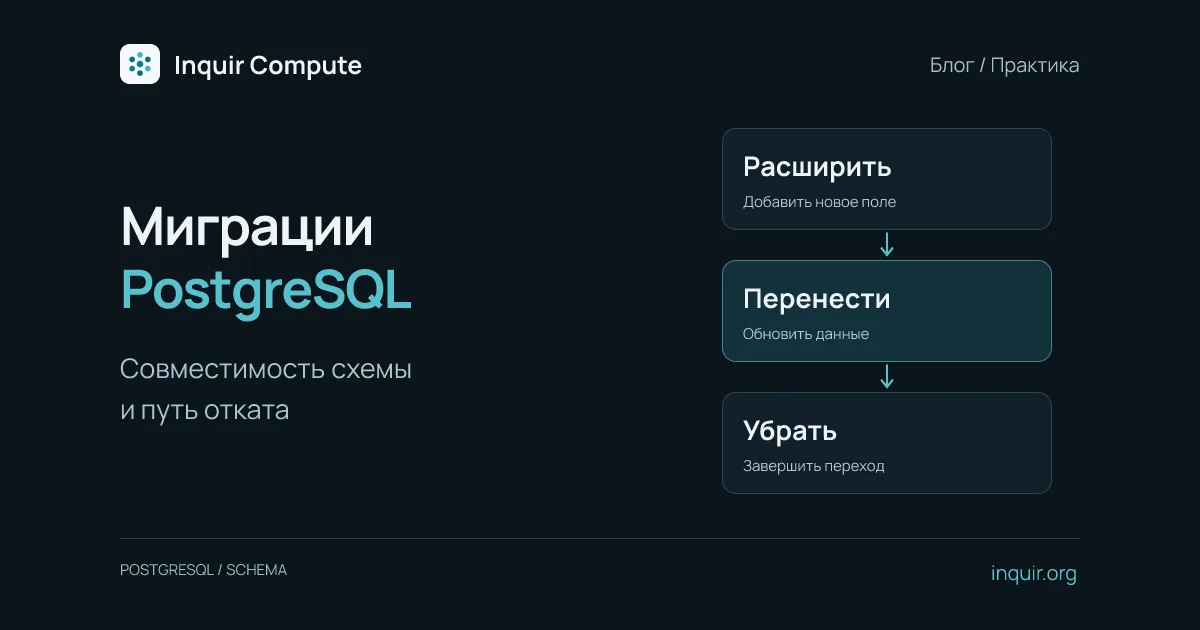
PostgreSQL migrations: change the schema and keep rollback possible
Plan a PostgreSQL schema change with compatible API versions, bounded backfills, lock checks and an application release sequence on Inquir.
Inquir Compute · · 4 min read -
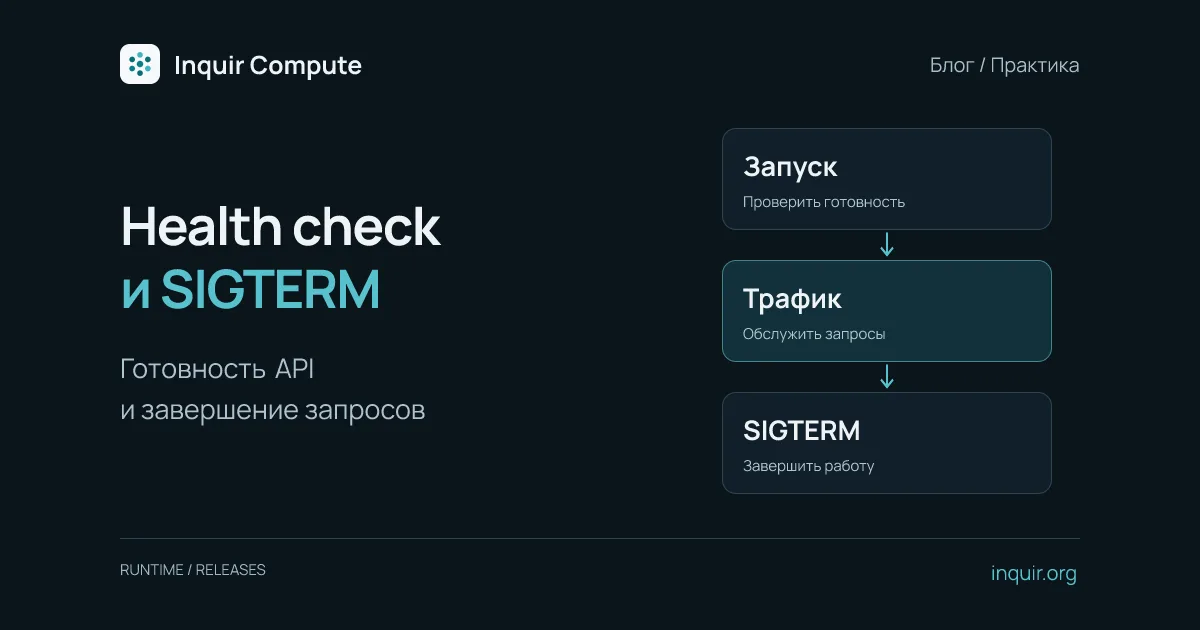
Health checks and SIGTERM: prepare an API for deployments
Separate process health from application readiness, handle SIGTERM without dropping routine requests, and verify a release on Inquir Compute.
Inquir Compute · · 3 min read -
A production Dockerfile: builds, caching and deployment on Inquir
Build a Node.js and TypeScript image with separate stages, a lockfile, a non-root user and a repeatable deployment checklist for Inquir Compute.
Inquir Compute · · 4 min read -
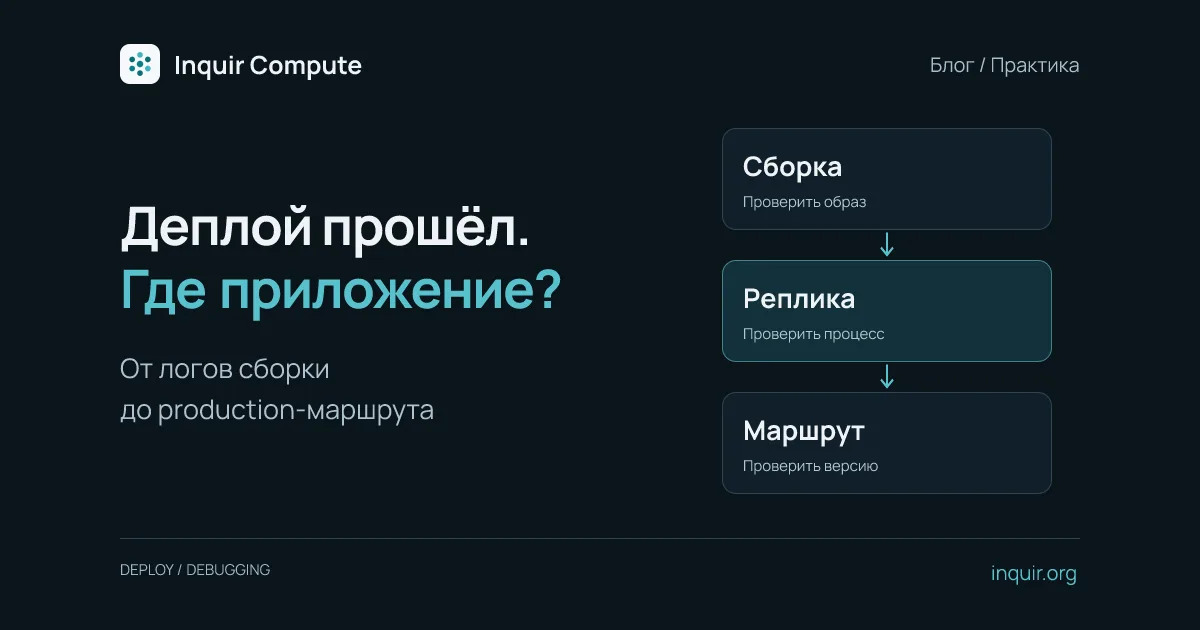
The container built, but the app is down: diagnose an Inquir deployment
Trace an Inquir deployment through build logs, running replicas, health checks and production promotion, with CLI commands for each step.
Inquir Compute · · 3 min read -
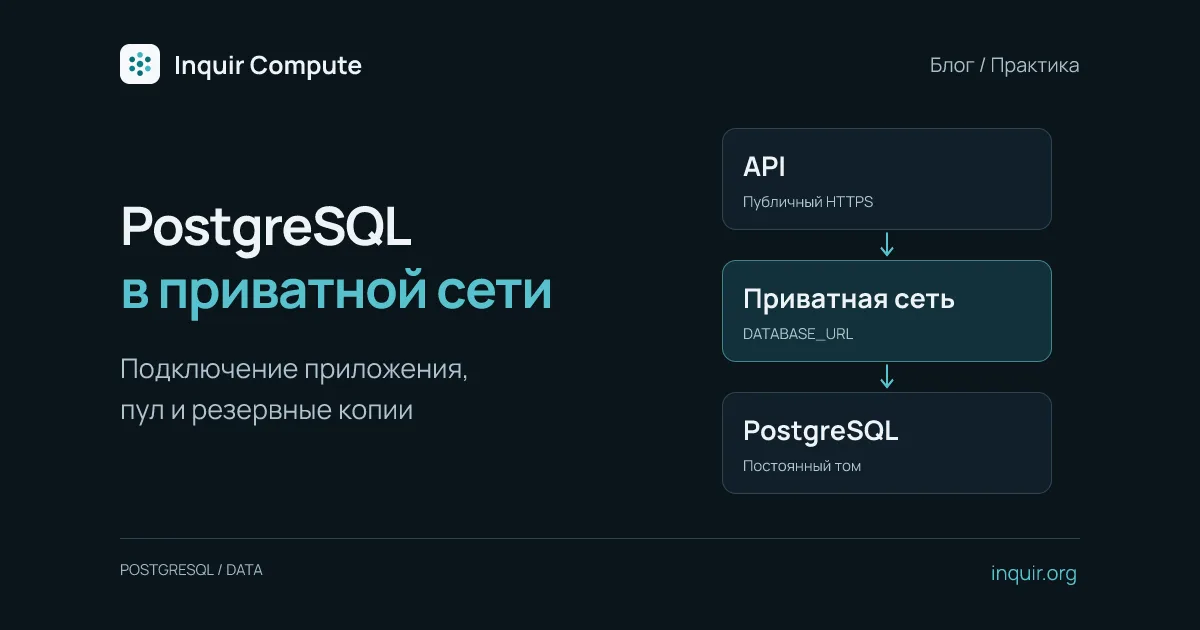
Connect an application to private PostgreSQL on Inquir
Create PostgreSQL in an Inquir project, connect your app with DATABASE_URL, size its pool and distinguish persistent storage from backups.
Inquir Compute · · 2 min read -
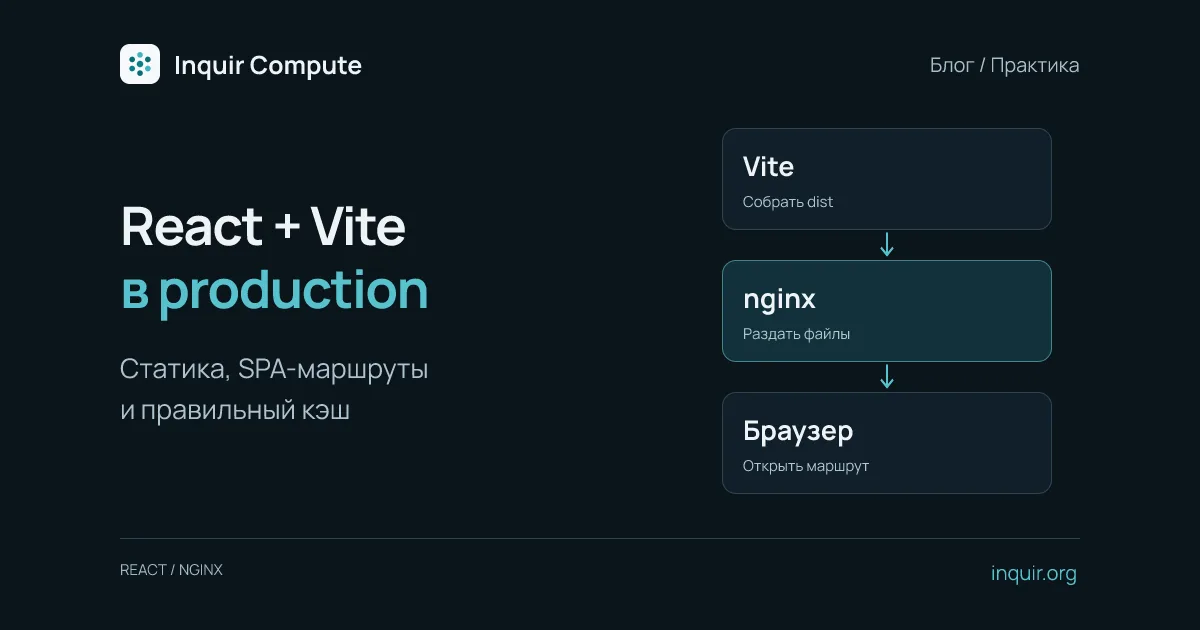
Deploy React and Vite with nginx, SPA routes and caching
Build a React app, configure nginx for nested routes and asset caching, and deploy the site on Inquir Compute.
Inquir Compute · · 2 min read -
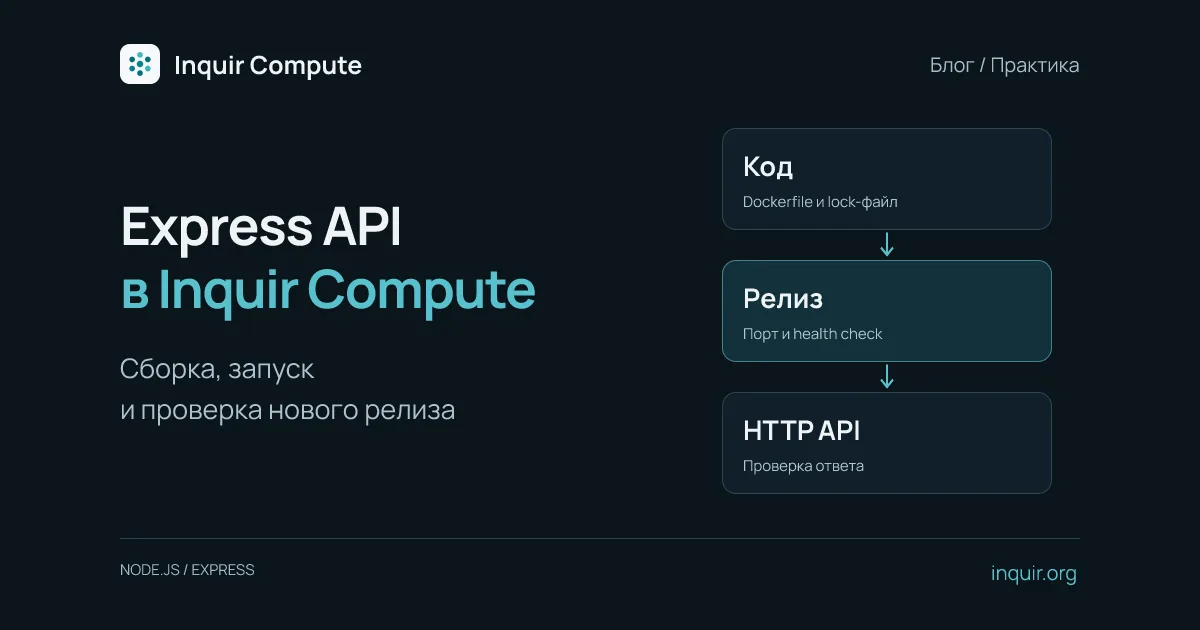
Deploy a Node.js Express API on Inquir Compute
Deploy Express on Inquir Compute with a Dockerfile, configure its port and health check, verify HTTP responses and roll back a release.
Inquir Compute · · 2 min read -
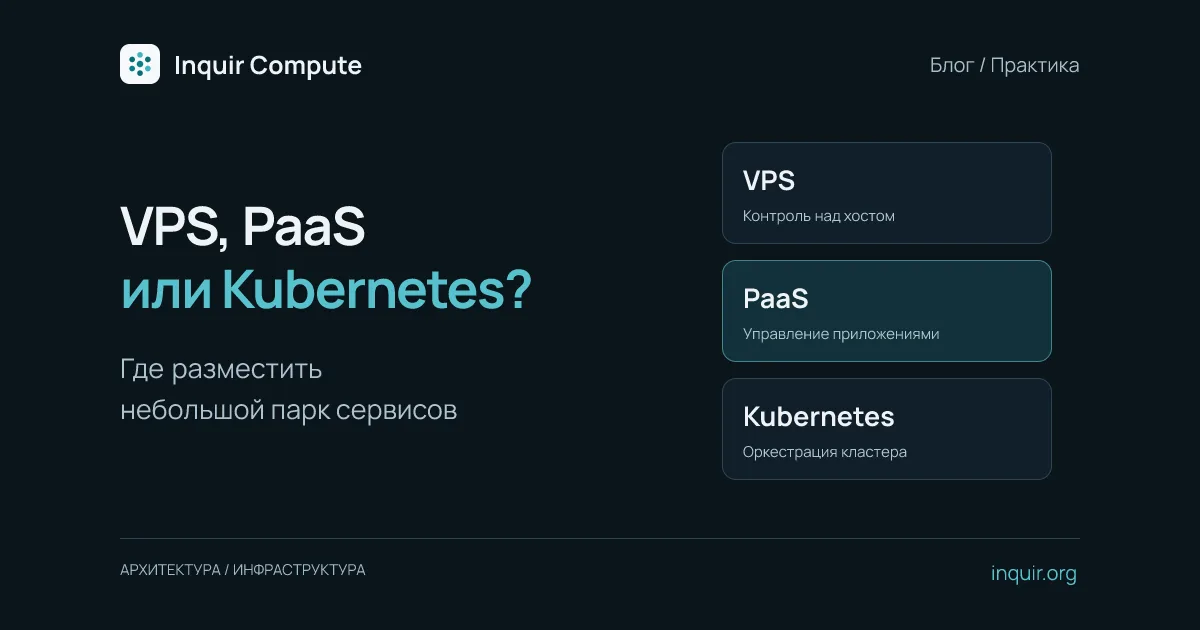
VPS, PaaS or Kubernetes for a small service fleet?
Compare operational effort, networking, persistent data and resource limits, then evaluate Inquir Compute with one application.
Команда Inquir Compute · · 4 min read -
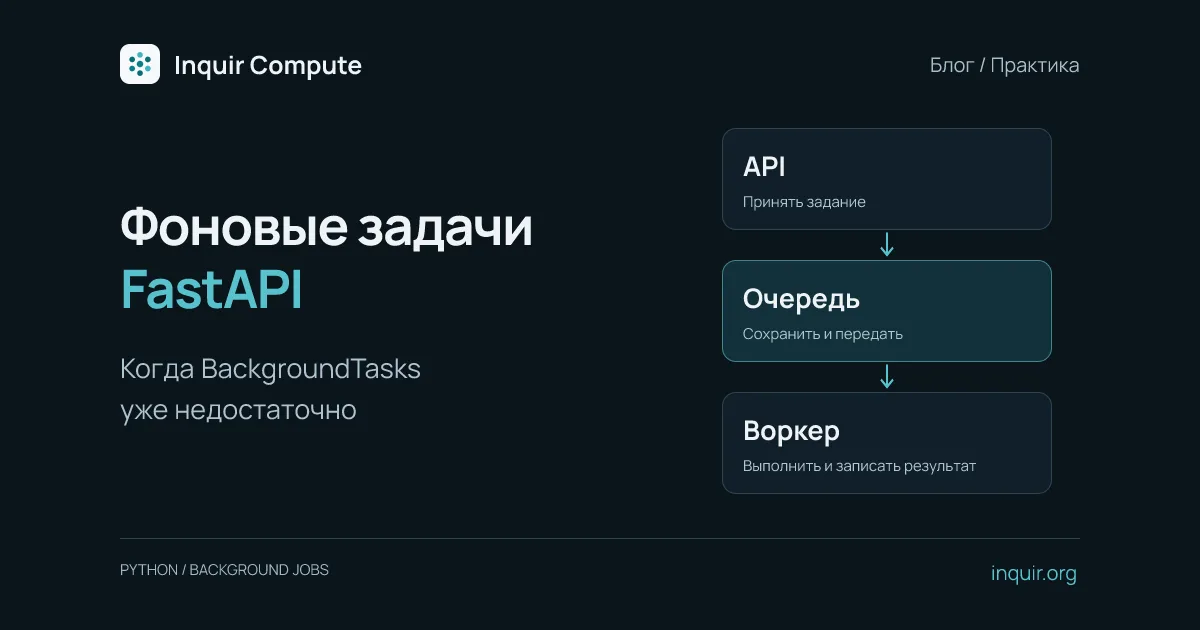
FastAPI background jobs: when BackgroundTasks is not enough
Choose between in-process tasks and durable jobs, deploy FastAPI and a worker on Inquir Compute, and test retries and recovery.
Команда Inquir Compute · · 4 min read -
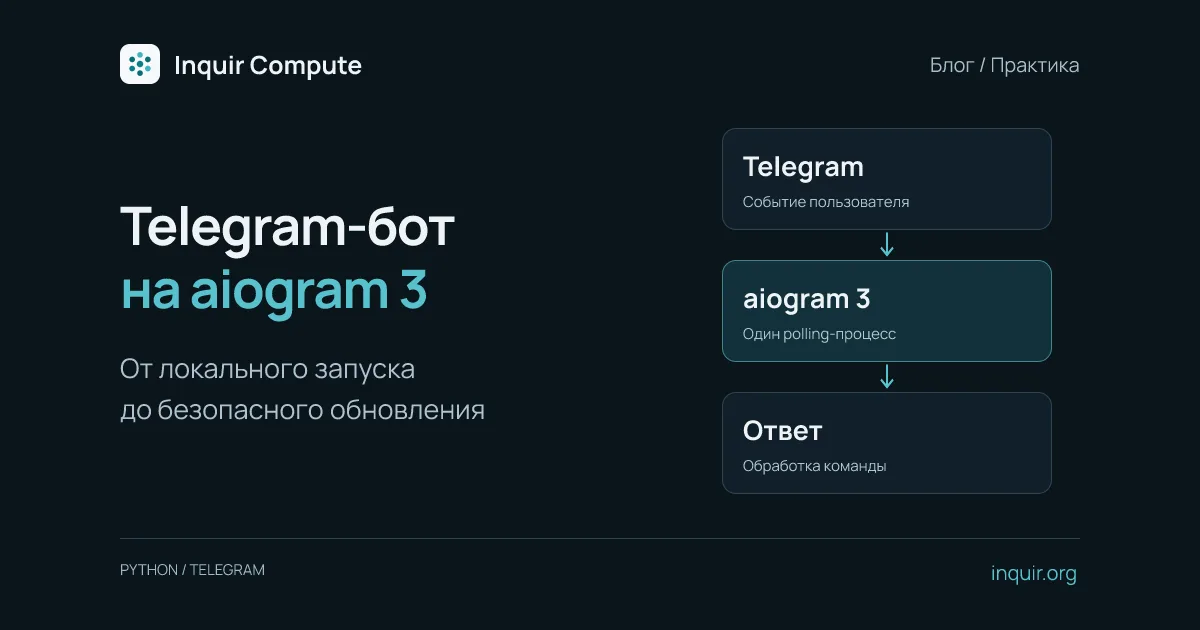
Deploy an aiogram 3 Telegram bot and update it safely
Package an aiogram 3 bot, configure secrets, deploy one polling receiver on Inquir Compute and test updates and recovery.
Команда Inquir Compute · · 4 min read -
How to Handle Stripe Webhooks Reliably on Serverless
Verify the stripe-signature on the raw body, acknowledge fast, dedupe on the event id, and fulfill asynchronously — the four moves that make serverless Stripe webhooks reliable.
Aleksandr Kubarskii · · 12 min read -
Secrets and environment variables for serverless functions
Why serverless secrets belong in per-function config injected as env vars — off your code, prompts, and client bundles — plus the auth-vs-config boundary and an honest scope: a config store, not a secrets manager.
Aleksandr Kubarskii · · 13 min read -
Three Steps to Create Your Endpoint with Inquir Compute
Aleksandr Kubarskii · · 5 min read -
Building a REST API on serverless functions
A pragmatic guide to shipping a serverless REST API on gateway-backed functions: map resources to routes, enforce API keys at the API gateway, standardize your request and response shape, add cursor pagination and a single error contract, and know exactly where the limits are.
Aleksandr Kubarskii · · 12 min read -
Serverless observability: traces, logs, and execution history
Ephemeral containers can't be SSH'd into. See how per-invocation execution history — traces, structured logs, retry counts, and 30-day retention — lets you debug a failed webhook, alert on failure rates, and answer 'what happened to request X?' as a lookup.
Aleksandr Kubarskii · · 10 min read -
Idempotency: making webhooks and background jobs safe to retry
At-least-once delivery means the same webhook will arrive more than once, so duplicates are inevitable. Here is the idempotency-key pattern, natural upserts, and where Inquir's startNew dedup, retries, and dead-letter queue help — and where you must be idempotent yourself.
Aleksandr Kubarskii · · 13 min read -
Serverless ML inference in Python: ONNX on CPU, load once
Serve a trained model behind an HTTP route without running a model server. The load-once-at-module-scope pattern, ONNX and scikit-learn attached as layers, memory and timeout budgets, warm pools, and the honest CPU-only limits.
Aleksandr Kubarskii · · 13 min read -
How to Handle GitHub Webhooks on Serverless
Verify x-hub-signature-256 with a timing-safe HMAC (or the turnkey webhookMode: 'github' route), route by x-github-event, dedupe by x-github-delivery, ack fast, then run CI/CD, bots, and notifications in async background jobs.
Aleksandr Kubarskii · · 12 min read -
Multi-step serverless pipelines: retries, branching, and human approval
Model long, multi-step work as a serverless pipeline of small steps — each with its own timeout, step retries, and run record — with branching, fan-out/fan-in, human approval gates that pause and resume, and cron triggers.
Aleksandr Kubarskii · · 13 min read